•  
XINHUA PHOTOS OF THE DAY

XINHUA PHOTOS OF THE DAY

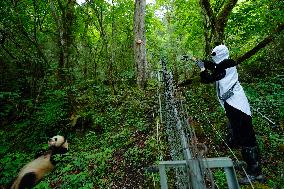
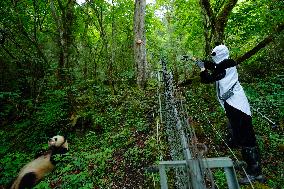
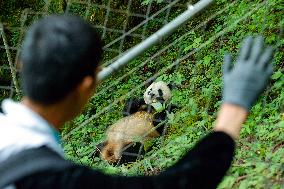
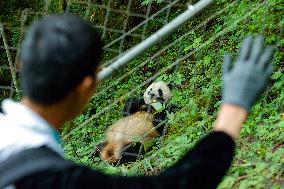
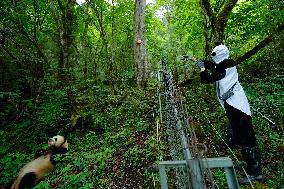
(240630) -- BEIJING, June 30, 2024 Photo by Xinhua/ABACAPRESS.COM) -- Staff member Mu Shijie, dressed up in a panda costume, feeds giant panda Xian Xian at the second-phase giant panda wild training fields of Tiantai Mountain in Wolong National Nature Reserve in southwest China's Sichuan Province, June 24, 2024. In recent years, China has made significant progress in panda conservation through a series of measures, including forest and wildlife protection as well as the construction of giant panda national parks. The wild giant panda population in China has grown from about 1,100 in the 1980s to nearly 1,900. Photo by Xinhua/ABACAPRESS.COM/Shen Bohan)

  •  
Giant Panda Reintroduction - China

Giant Panda Reintroduction - China

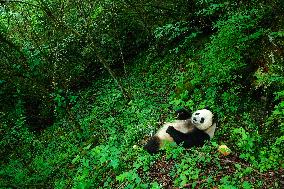
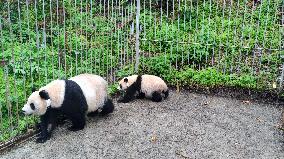
WOLONG, June 29, 2024 -- This file photo taken on Sept. 16, 2014 shows giant panda cub Hua Jiao (L), the world's first giant panda cub with both captive and wild parents, and her mother Cao Cao in the wild training fields. In recent years, China has made significant progress in panda conservation through a series of measures, including forest and wildlife protection as well as the construction of giant panda national parks. The wild giant panda population in China has grown from about 1,100 in the 1980s to nearly 1,900. Giant panda reintroduction refers to releasing captive-bred giant pandas to their historical distribution areas to live and reproduce after acclimatization training so as to rebuild the wild population of the species. China Conservation and Research Center for the Giant Panda (CCRCGP) started a reintroduction program in 2003. It has reintroduced eleven pandas into the wild, nine of which survived. In the future, the center will continue to train more individual panda cubs using the mother-cub

  •  
Giant Panda Reintroduction - China

Giant Panda Reintroduction - China

WOLONG, June 29, 2024 -- This file photo taken on Nov. 20, 2010 shows staff members dressed up in giant panda costumes holding a giant panda cub into a bamboo basket at the second-phase giant panda wild training fields of Hetaoping panda base in Wolong, southwest China's Sichuan Province. In recent years, China has made significant progress in panda conservation through a series of measures, including forest and wildlife protection as well as the construction of giant panda national parks. The wild giant panda population in China has grown from about 1,100 in the 1980s to nearly 1,900. Giant panda reintroduction refers to releasing captive-bred giant pandas to their historical distribution areas to live and reproduce after acclimatization training so as to rebuild the wild population of the species. China Conservation and Research Center for the Giant Panda (CCRCGP) started a reintroduction program in 2003. It has reintroduced eleven pandas into the wild, nine of which survived. In the future, the center will

  •  
Giant Panda Reintroduction - China

Giant Panda Reintroduction - China

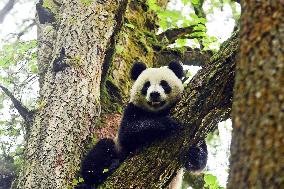
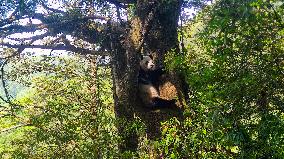
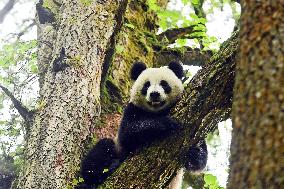
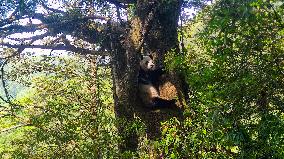
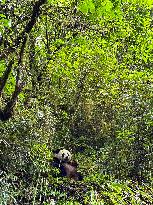
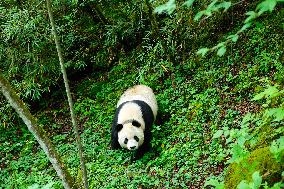
WOLONG, June 29, 2024 -- This file photo taken on June 4, 2020 shows a giant panda resting on a tree during wild training at Tiantai Mountain in Wolong National Nature Reserve in southwest China's Sichuan Province. In recent years, China has made significant progress in panda conservation through a series of measures, including forest and wildlife protection as well as the construction of giant panda national parks. The wild giant panda population in China has grown from about 1,100 in the 1980s to nearly 1,900. Giant panda reintroduction refers to releasing captive-bred giant pandas to their historical distribution areas to live and reproduce after acclimatization training so as to rebuild the wild population of the species. China Conservation and Research Center for the Giant Panda (CCRCGP) started a reintroduction program in 2003. It has reintroduced eleven pandas into the wild, nine of which survived. In the future, the center will continue to train more individual panda cubs using the mother-cub process

  •  
Giant Panda Reintroduction - China

Giant Panda Reintroduction - China

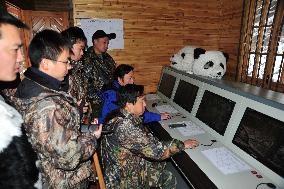
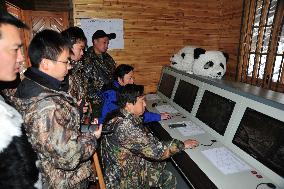
WOLONG, June 29, 2024 -- This file photo taken on Nov. 20, 2010 shows staff members monitoring the giant panda wild training fields of Hetaoping panda base in Wolong, southwest China's Sichuan Province. In recent years, China has made significant progress in panda conservation through a series of measures, including forest and wildlife protection as well as the construction of giant panda national parks. The wild giant panda population in China has grown from about 1,100 in the 1980s to nearly 1,900. Giant panda reintroduction refers to releasing captive-bred giant pandas to their historical distribution areas to live and reproduce after acclimatization training so as to rebuild the wild population of the species. China Conservation and Research Center for the Giant Panda (CCRCGP) started a reintroduction program in 2003. It has reintroduced eleven pandas into the wild, nine of which survived. In the future, the center will continue to train more individual panda cubs using the mother-cub process before relea

  •  
Giant Panda Reintroduction - China

Giant Panda Reintroduction - China

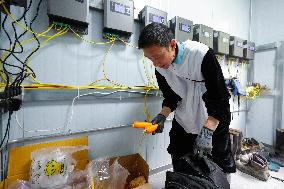
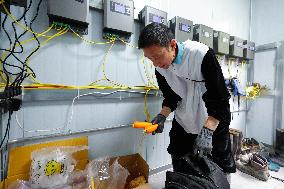
WOLONG, June 29, 2024 -- Staff member Mu Shijie prepares to patrol the giant panda wild training fields of Tiantai Mountain in Wolong National Nature Reserve in southwest China's Sichuan Province, June 24, 2024. In recent years, China has made significant progress in panda conservation through a series of measures, including forest and wildlife protection as well as the construction of giant panda national parks. The wild giant panda population in China has grown from about 1,100 in the 1980s to nearly 1,900. Giant panda reintroduction refers to releasing captive-bred giant pandas to their historical distribution areas to live and reproduce after acclimatization training so as to rebuild the wild population of the species. China Conservation and Research Center for the Giant Panda (CCRCGP) started a reintroduction program in 2003. It has reintroduced eleven pandas into the wild, nine of which survived. In the future, the center will continue to train more individual panda cubs using the mother-cub process bef

  •  
Giant Panda Reintroduction - China

Giant Panda Reintroduction - China

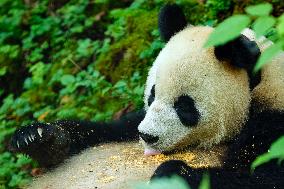
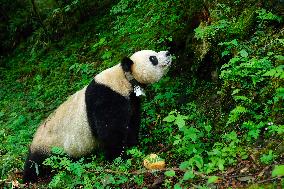
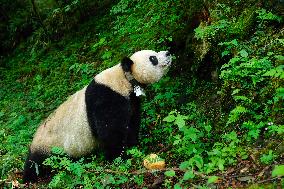
WOLONG, June 29, 2024 -- Giant panda Xian Xian has food at the second-phase giant panda wild training fields of Tiantai Mountain in Wolong National Nature Reserve in southwest China's Sichuan Province, June 24, 2024. In recent years, China has made significant progress in panda conservation through a series of measures, including forest and wildlife protection as well as the construction of giant panda national parks. The wild giant panda population in China has grown from about 1,100 in the 1980s to nearly 1,900. Giant panda reintroduction refers to releasing captive-bred giant pandas to their historical distribution areas to live and reproduce after acclimatization training so as to rebuild the wild population of the species. China Conservation and Research Center for the Giant Panda (CCRCGP) started a reintroduction program in 2003. It has reintroduced eleven pandas into the wild, nine of which survived. In the future, the center will continue to train more individual panda cubs using the mother-cub proces

  •  
Giant Panda Reintroduction - China

Giant Panda Reintroduction - China

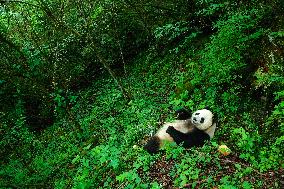
WOLONG, June 29, 2024 -- Giant panda Hui Hui is seen on a tree at the second-phase giant panda wild training fields of Tiantai Mountain in Wolong National Nature Reserve in southwest China's Sichuan Province, May 22, 2024. In recent years, China has made significant progress in panda conservation through a series of measures, including forest and wildlife protection as well as the construction of giant panda national parks. The wild giant panda population in China has grown from about 1,100 in the 1980s to nearly 1,900. Giant panda reintroduction refers to releasing captive-bred giant pandas to their historical distribution areas to live and reproduce after acclimatization training so as to rebuild the wild population of the species. China Conservation and Research Center for the Giant Panda (CCRCGP) started a reintroduction program in 2003. It has reintroduced eleven pandas into the wild, nine of which survived. In the future, the center will continue to train more individual panda cubs using the mother-cub

  •  
Giant Panda Reintroduction - China

Giant Panda Reintroduction - China

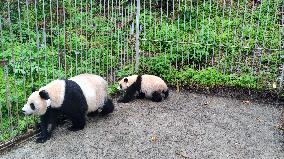
WOLONG, June 29, 2024 -- Giant panda Hui Hui and her cub are seen at the wild training fields of Tiantai Mountain in Wolong National Nature Reserve in southwest China's Sichuan Province, June 1, 2024. In recent years, China has made significant progress in panda conservation through a series of measures, including forest and wildlife protection as well as the construction of giant panda national parks. The wild giant panda population in China has grown from about 1,100 in the 1980s to nearly 1,900. Giant panda reintroduction refers to releasing captive-bred giant pandas to their historical distribution areas to live and reproduce after acclimatization training so as to rebuild the wild population of the species. China Conservation and Research Center for the Giant Panda (CCRCGP) started a reintroduction program in 2003. It has reintroduced eleven pandas into the wild, nine of which survived. In the future, the center will continue to train more individual panda cubs using the mother-cub process before releasi

  •  
Giant Panda Reintroduction - China

Giant Panda Reintroduction - China

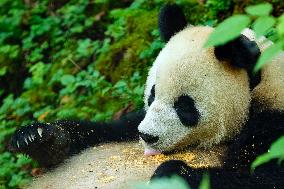
WOLONG, June 29, 2024 -- Giant panda Tian Tian has carrots at the second-phase giant panda wild training fields of Tiantai Mountain in Wolong National Nature Reserve in southwest China's Sichuan Province, May 29, 2024. In recent years, China has made significant progress in panda conservation through a series of measures, including forest and wildlife protection as well as the construction of giant panda national parks. The wild giant panda population in China has grown from about 1,100 in the 1980s to nearly 1,900. Giant panda reintroduction refers to releasing captive-bred giant pandas to their historical distribution areas to live and reproduce after acclimatization training so as to rebuild the wild population of the species. China Conservation and Research Center for the Giant Panda (CCRCGP) started a reintroduction program in 2003. It has reintroduced eleven pandas into the wild, nine of which survived. In the future, the center will continue to train more individual panda cubs using the mother-cub proc

  •  
Giant Panda Reintroduction - China

Giant Panda Reintroduction - China

WOLONG, June 29, 2024 -- Giant panda Xian Xian has food at the second-phase giant panda wild training fields of Tiantai Mountain in Wolong National Nature Reserve in southwest China's Sichuan Province, June 24, 2024. In recent years, China has made significant progress in panda conservation through a series of measures, including forest and wildlife protection as well as the construction of giant panda national parks. The wild giant panda population in China has grown from about 1,100 in the 1980s to nearly 1,900. Giant panda reintroduction refers to releasing captive-bred giant pandas to their historical distribution areas to live and reproduce after acclimatization training so as to rebuild the wild population of the species. China Conservation and Research Center for the Giant Panda (CCRCGP) started a reintroduction program in 2003. It has reintroduced eleven pandas into the wild, nine of which survived. In the future, the center will continue to train more individual panda cubs using the mother-cub proces

  •  
Giant Panda Reintroduction - China

Giant Panda Reintroduction - China

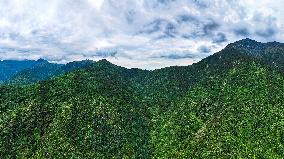
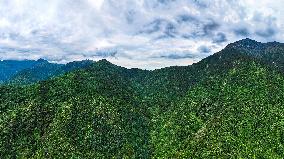
WOLONG, June 29, 2024 -- An aerial drone photo taken on June 24, 2024 shows a view of giant panda wild training fields of Tiantai Mountain in Wolong National Nature Reserve in southwest China's Sichuan Province, June 24, 2024. In recent years, China has made significant progress in panda conservation through a series of measures, including forest and wildlife protection as well as the construction of giant panda national parks. The wild giant panda population in China has grown from about 1,100 in the 1980s to nearly 1,900. Giant panda reintroduction refers to releasing captive-bred giant pandas to their historical distribution areas to live and reproduce after acclimatization training so as to rebuild the wild population of the species. China Conservation and Research Center for the Giant Panda (CCRCGP) started a reintroduction program in 2003. It has reintroduced eleven pandas into the wild, nine of which survived. In the future, the center will continue to train more individual panda cubs using the mother-

  •  
Giant Panda Reintroduction - China

Giant Panda Reintroduction - China

WOLONG, June 29, 2024 -- Staff member Mu Shijie is pictured on the way to the second-phase giant panda wild training fields of Tiantai Mountain in Wolong National Nature Reserve in southwest China's Sichuan Province, June 24, 2024. In recent years, China has made significant progress in panda conservation through a series of measures, including forest and wildlife protection as well as the construction of giant panda national parks. The wild giant panda population in China has grown from about 1,100 in the 1980s to nearly 1,900. Giant panda reintroduction refers to releasing captive-bred giant pandas to their historical distribution areas to live and reproduce after acclimatization training so as to rebuild the wild population of the species. China Conservation and Research Center for the Giant Panda (CCRCGP) started a reintroduction program in 2003. It has reintroduced eleven pandas into the wild, nine of which survived. In the future, the center will continue to train more individual panda cubs using the mo

  •  
Giant Panda Reintroduction - China

Giant Panda Reintroduction - China

WOLONG, June 29, 2024 -- Staff member Mu Shijie looks for giant panda cubs while patrolling the second-phase giant panda wild training fields of Tiantai Mountain in Wolong National Nature Reserve in southwest China's Sichuan Province, June 24, 2024. In recent years, China has made significant progress in panda conservation through a series of measures, including forest and wildlife protection as well as the construction of giant panda national parks. The wild giant panda population in China has grown from about 1,100 in the 1980s to nearly 1,900. Giant panda reintroduction refers to releasing captive-bred giant pandas to their historical distribution areas to live and reproduce after acclimatization training so as to rebuild the wild population of the species. China Conservation and Research Center for the Giant Panda (CCRCGP) started a reintroduction program in 2003. It has reintroduced eleven pandas into the wild, nine of which survived. In the future, the center will continue to train more individual panda

  •  
Giant Panda Reintroduction - China

Giant Panda Reintroduction - China

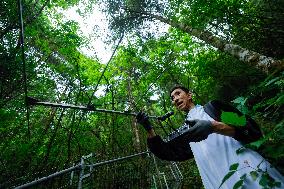
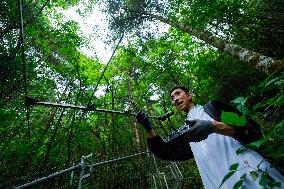
WOLONG, June 29, 2024 -- Staff member Mu Shijie uses a radio positioning device to trace giant panda Xian Xian while calling out her name at Tiantai Mountain in Wolong National Nature Reserve in southwest China's Sichuan Province, June 24, 2024. In recent years, China has made significant progress in panda conservation through a series of measures, including forest and wildlife protection as well as the construction of giant panda national parks. The wild giant panda population in China has grown from about 1,100 in the 1980s to nearly 1,900. Giant panda reintroduction refers to releasing captive-bred giant pandas to their historical distribution areas to live and reproduce after acclimatization training so as to rebuild the wild population of the species. China Conservation and Research Center for the Giant Panda (CCRCGP) started a reintroduction program in 2003. It has reintroduced eleven pandas into the wild, nine of which survived. In the future, the center will continue to train more individual panda cub

  •  
Giant Panda Reintroduction - China

Giant Panda Reintroduction - China

WOLONG, June 29, 2024 -- Staff member Mu Shijie uses a DIY bamboo leaf whislte to call giant panda Hui Hui out for foraging at the second-phase giant panda wild training fields of Tiantai Mountain in Wolong National Nature Reserve in southwest China's Sichuan Province, June 24, 2024. In recent years, China has made significant progress in panda conservation through a series of measures, including forest and wildlife protection as well as the construction of giant panda national parks. The wild giant panda population in China has grown from about 1,100 in the 1980s to nearly 1,900. Giant panda reintroduction refers to releasing captive-bred giant pandas to their historical distribution areas to live and reproduce after acclimatization training so as to rebuild the wild population of the species. China Conservation and Research Center for the Giant Panda (CCRCGP) started a reintroduction program in 2003. It has reintroduced eleven pandas into the wild, nine of which survived. In the future, the center will cont

  •  
Giant Panda Reintroduction - China

Giant Panda Reintroduction - China

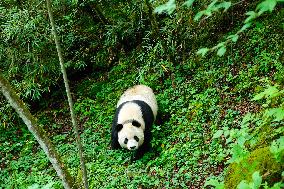
WOLONG, June 29, 2024 -- Giant panda Xian Xian is pictured at the second-phase giant panda wild training fields of Tiantai Mountain in Wolong National Nature Reserve in southwest China's Sichuan Province, June 24, 2024. In recent years, China has made significant progress in panda conservation through a series of measures, including forest and wildlife protection as well as the construction of giant panda national parks. The wild giant panda population in China has grown from about 1,100 in the 1980s to nearly 1,900. Giant panda reintroduction refers to releasing captive-bred giant pandas to their historical distribution areas to live and reproduce after acclimatization training so as to rebuild the wild population of the species. China Conservation and Research Center for the Giant Panda (CCRCGP) started a reintroduction program in 2003. It has reintroduced eleven pandas into the wild, nine of which survived. In the future, the center will continue to train more individual panda cubs using the mother-cub pro

  •  
Giant Panda Reintroduction - China

Giant Panda Reintroduction - China

WOLONG, June 29, 2024 -- Staff member Mu Shijie, dressed up in a panda costume, feeds giant panda Xian Xian at the second-phase giant panda wild training fields of Tiantai Mountain in Wolong National Nature Reserve in southwest China's Sichuan Province, June 24, 2024. In recent years, China has made significant progress in panda conservation through a series of measures, including forest and wildlife protection as well as the construction of giant panda national parks. The wild giant panda population in China has grown from about 1,100 in the 1980s to nearly 1,900. Giant panda reintroduction refers to releasing captive-bred giant pandas to their historical distribution areas to live and reproduce after acclimatization training so as to rebuild the wild population of the species. China Conservation and Research Center for the Giant Panda (CCRCGP) started a reintroduction program in 2003. It has reintroduced eleven pandas into the wild, nine of which survived. In the future, the center will continue to train mo

  •  
Giant Panda Reintroduction - China

Giant Panda Reintroduction - China

WOLONG, June 29, 2024 -- Giant panda Xian Xian has food at the second-phase giant panda wild training fields of Tiantai Mountain in Wolong National Nature Reserve in southwest China's Sichuan Province, June 24, 2024. In recent years, China has made significant progress in panda conservation through a series of measures, including forest and wildlife protection as well as the construction of giant panda national parks. The wild giant panda population in China has grown from about 1,100 in the 1980s to nearly 1,900. Giant panda reintroduction refers to releasing captive-bred giant pandas to their historical distribution areas to live and reproduce after acclimatization training so as to rebuild the wild population of the species. China Conservation and Research Center for the Giant Panda (CCRCGP) started a reintroduction program in 2003. It has reintroduced eleven pandas into the wild, nine of which survived. In the future, the center will continue to train more individual panda cubs using the mother-cub proces

  •  
Giant Panda Reintroduction - China

Giant Panda Reintroduction - China

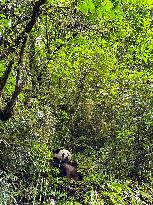
WOLONG, June 29, 2024 -- Giant panda Xian Xian comes out of the bamboo forest upon hearing the foraging call made by staff member Mu Shijie at the second-phase giant panda wild training fields of Tiantai Mountain in Wolong National Nature Reserve in southwest China's Sichuan Province, June 24, 2024. In recent years, China has made significant progress in panda conservation through a series of measures, including forest and wildlife protection as well as the construction of giant panda national parks. The wild giant panda population in China has grown from about 1,100 in the 1980s to nearly 1,900. Giant panda reintroduction refers to releasing captive-bred giant pandas to their historical distribution areas to live and reproduce after acclimatization training so as to rebuild the wild population of the species. China Conservation and Research Center for the Giant Panda (CCRCGP) started a reintroduction program in 2003. It has reintroduced eleven pandas into the wild, nine of which survived. In the future, the

  •  
Giant Panda Reintroduction - China

Giant Panda Reintroduction - China

WOLONG, June 29, 2024 -- Staff member Mu Shijie records videos of giant panda Xian Xian outside the second-phase giant panda wild training fields of Tiantai Mountain in Wolong National Nature Reserve in southwest China's Sichuan Province, June 24, 2024. In recent years, China has made significant progress in panda conservation through a series of measures, including forest and wildlife protection as well as the construction of giant panda national parks. The wild giant panda population in China has grown from about 1,100 in the 1980s to nearly 1,900. Giant panda reintroduction refers to releasing captive-bred giant pandas to their historical distribution areas to live and reproduce after acclimatization training so as to rebuild the wild population of the species. China Conservation and Research Center for the Giant Panda (CCRCGP) started a reintroduction program in 2003. It has reintroduced eleven pandas into the wild, nine of which survived. In the future, the center will continue to train more individual p

  •  
Giant Panda Reintroduction - China

Giant Panda Reintroduction - China

WOLONG, June 29, 2024 -- Staff member Mu Shijie waves goodbye to giant panda Xian Xian after feeding her at the second-phase giant panda wild training fields of Tiantai Mountain in Wolong National Nature Reserve in southwest China's Sichuan Province, June 24, 2024. In recent years, China has made significant progress in panda conservation through a series of measures, including forest and wildlife protection as well as the construction of giant panda national parks. The wild giant panda population in China has grown from about 1,100 in the 1980s to nearly 1,900. Giant panda reintroduction refers to releasing captive-bred giant pandas to their historical distribution areas to live and reproduce after acclimatization training so as to rebuild the wild population of the species. China Conservation and Research Center for the Giant Panda (CCRCGP) started a reintroduction program in 2003. It has reintroduced eleven pandas into the wild, nine of which survived. In the future, the center will continue to train more

  •  
(FOCUS)CHINA-SICHUAN-GIANT PANDA-REINTRODUCTION (CN)

(FOCUS)CHINA-SICHUAN-GIANT PANDA-REINTRODUCTION (CN)

(240629) -- WOLONG, June 29, 2024 Photo by Xinhua/ABACAPRESS.COM) -- Staff member Mu Shijie looks for giant panda cubs while patrolling the second-phase giant panda wild training fields of Tiantai Mountain in Wolong National Nature Reserve in southwest China's Sichuan Province, June 24, 2024. In recent years, China has made significant progress in panda conservation through a series of measures, including forest and wildlife protection as well as the construction of giant panda national parks. The wild giant panda population in China has grown from about 1,100 in the 1980s to nearly 1,900. Giant panda reintroduction refers to releasing captive-bred giant pandas to their historical distribution areas to live and reproduce after acclimatization training so as to rebuild the wild population of the species. China Conservation and Research Center for the Giant Panda (CCRCGP) started a reintroduction program in 2003. It has reintroduced eleven pandas into the wild, nine of which survived. In the future, the center

  •  
(FOCUS)CHINA-SICHUAN-GIANT PANDA-REINTRODUCTION (CN)

(FOCUS)CHINA-SICHUAN-GIANT PANDA-REINTRODUCTION (CN)

(240629) -- WOLONG, June 29, 2024 Photo by Xinhua/ABACAPRESS.COM) -- Giant panda Xian Xian has food at the second-phase giant panda wild training fields of Tiantai Mountain in Wolong National Nature Reserve in southwest China's Sichuan Province, June 24, 2024. In recent years, China has made significant progress in panda conservation through a series of measures, including forest and wildlife protection as well as the construction of giant panda national parks. The wild giant panda population in China has grown from about 1,100 in the 1980s to nearly 1,900. Giant panda reintroduction refers to releasing captive-bred giant pandas to their historical distribution areas to live and reproduce after acclimatization training so as to rebuild the wild population of the species. China Conservation and Research Center for the Giant Panda (CCRCGP) started a reintroduction program in 2003. It has reintroduced eleven pandas into the wild, nine of which survived. In the future, the center will continue to train more indiv

  •  
(FOCUS)CHINA-SICHUAN-GIANT PANDA-REINTRODUCTION (CN)

(FOCUS)CHINA-SICHUAN-GIANT PANDA-REINTRODUCTION (CN)

(240629) -- WOLONG, June 29, 2024 Photo by Xinhua/ABACAPRESS.COM) -- This file photo taken on June 4, 2020 shows a giant panda resting on a tree during wild training at Tiantai Mountain in Wolong National Nature Reserve in southwest China's Sichuan Province. In recent years, China has made significant progress in panda conservation through a series of measures, including forest and wildlife protection as well as the construction of giant panda national parks. The wild giant panda population in China has grown from about 1,100 in the 1980s to nearly 1,900. Giant panda reintroduction refers to releasing captive-bred giant pandas to their historical distribution areas to live and reproduce after acclimatization training so as to rebuild the wild population of the species. China Conservation and Research Center for the Giant Panda (CCRCGP) started a reintroduction program in 2003. It has reintroduced eleven pandas into the wild, nine of which survived. In the future, the center will continue to train more individ

  •  
(FOCUS)CHINA-SICHUAN-GIANT PANDA-REINTRODUCTION (CN)

(FOCUS)CHINA-SICHUAN-GIANT PANDA-REINTRODUCTION (CN)

(240629) -- WOLONG, June 29, 2024 Photo by Xinhua/ABACAPRESS.COM) -- Staff member Mu Shijie waves goodbye to giant panda Xian Xian after feeding her at the second-phase giant panda wild training fields of Tiantai Mountain in Wolong National Nature Reserve in southwest China's Sichuan Province, June 24, 2024. In recent years, China has made significant progress in panda conservation through a series of measures, including forest and wildlife protection as well as the construction of giant panda national parks. The wild giant panda population in China has grown from about 1,100 in the 1980s to nearly 1,900. Giant panda reintroduction refers to releasing captive-bred giant pandas to their historical distribution areas to live and reproduce after acclimatization training so as to rebuild the wild population of the species. China Conservation and Research Center for the Giant Panda (CCRCGP) started a reintroduction program in 2003. It has reintroduced eleven pandas into the wild, nine of which survived. In the fut

  •  
(FOCUS)CHINA-SICHUAN-GIANT PANDA-REINTRODUCTION (CN)

(FOCUS)CHINA-SICHUAN-GIANT PANDA-REINTRODUCTION (CN)

(240629) -- WOLONG, June 29, 2024 Photo by Xinhua/ABACAPRESS.COM) -- Staff member Mu Shijie uses a DIY bamboo leaf whislte to call giant panda Hui Hui out for foraging at the second-phase giant panda wild training fields of Tiantai Mountain in Wolong National Nature Reserve in southwest China's Sichuan Province, June 24, 2024. In recent years, China has made significant progress in panda conservation through a series of measures, including forest and wildlife protection as well as the construction of giant panda national parks. The wild giant panda population in China has grown from about 1,100 in the 1980s to nearly 1,900. Giant panda reintroduction refers to releasing captive-bred giant pandas to their historical distribution areas to live and reproduce after acclimatization training so as to rebuild the wild population of the species. China Conservation and Research Center for the Giant Panda (CCRCGP) started a reintroduction program in 2003. It has reintroduced eleven pandas into the wild, nine of which s

  •  
(FOCUS)CHINA-SICHUAN-GIANT PANDA-REINTRODUCTION (CN)

(FOCUS)CHINA-SICHUAN-GIANT PANDA-REINTRODUCTION (CN)

(240629) -- WOLONG, June 29, 2024 Photo by Xinhua/ABACAPRESS.COM) -- This file photo taken on Nov. 20, 2010 shows staff members dressed up in giant panda costumes holding a giant panda cub into a bamboo basket at the second-phase giant panda wild training fields of Hetaoping panda base in Wolong, southwest China's Sichuan Province. In recent years, China has made significant progress in panda conservation through a series of measures, including forest and wildlife protection as well as the construction of giant panda national parks. The wild giant panda population in China has grown from about 1,100 in the 1980s to nearly 1,900. Giant panda reintroduction refers to releasing captive-bred giant pandas to their historical distribution areas to live and reproduce after acclimatization training so as to rebuild the wild population of the species. China Conservation and Research Center for the Giant Panda (CCRCGP) started a reintroduction program in 2003. It has reintroduced eleven pandas into the wild, nine of wh

  •  
(FOCUS)CHINA-SICHUAN-GIANT PANDA-REINTRODUCTION (CN)

(FOCUS)CHINA-SICHUAN-GIANT PANDA-REINTRODUCTION (CN)

(240629) -- WOLONG, June 29, 2024 Photo by Xinhua/ABACAPRESS.COM) -- Giant panda Xian Xian is pictured at the second-phase giant panda wild training fields of Tiantai Mountain in Wolong National Nature Reserve in southwest China's Sichuan Province, June 24, 2024. In recent years, China has made significant progress in panda conservation through a series of measures, including forest and wildlife protection as well as the construction of giant panda national parks. The wild giant panda population in China has grown from about 1,100 in the 1980s to nearly 1,900. Giant panda reintroduction refers to releasing captive-bred giant pandas to their historical distribution areas to live and reproduce after acclimatization training so as to rebuild the wild population of the species. China Conservation and Research Center for the Giant Panda (CCRCGP) started a reintroduction program in 2003. It has reintroduced eleven pandas into the wild, nine of which survived. In the future, the center will continue to train more in

  •  
(FOCUS)CHINA-SICHUAN-GIANT PANDA-REINTRODUCTION (CN)

(FOCUS)CHINA-SICHUAN-GIANT PANDA-REINTRODUCTION (CN)

(240629) -- WOLONG, June 29, 2024 Photo by Xinhua/ABACAPRESS.COM) -- Giant panda Hui Hui is seen on a tree at the second-phase giant panda wild training fields of Tiantai Mountain in Wolong National Nature Reserve in southwest China's Sichuan Province, May 22, 2024. In recent years, China has made significant progress in panda conservation through a series of measures, including forest and wildlife protection as well as the construction of giant panda national parks. The wild giant panda population in China has grown from about 1,100 in the 1980s to nearly 1,900. Giant panda reintroduction refers to releasing captive-bred giant pandas to their historical distribution areas to live and reproduce after acclimatization training so as to rebuild the wild population of the species. China Conservation and Research Center for the Giant Panda (CCRCGP) started a reintroduction program in 2003. It has reintroduced eleven pandas into the wild, nine of which survived. In the future, the center will continue to train more

  •  
(FOCUS)CHINA-SICHUAN-GIANT PANDA-REINTRODUCTION (CN)

(FOCUS)CHINA-SICHUAN-GIANT PANDA-REINTRODUCTION (CN)

(240629) -- WOLONG, June 29, 2024 Photo by Xinhua/ABACAPRESS.COM) -- Staff member Mu Shijie is pictured on the way to the second-phase giant panda wild training fields of Tiantai Mountain in Wolong National Nature Reserve in southwest China's Sichuan Province, June 24, 2024. In recent years, China has made significant progress in panda conservation through a series of measures, including forest and wildlife protection as well as the construction of giant panda national parks. The wild giant panda population in China has grown from about 1,100 in the 1980s to nearly 1,900. Giant panda reintroduction refers to releasing captive-bred giant pandas to their historical distribution areas to live and reproduce after acclimatization training so as to rebuild the wild population of the species. China Conservation and Research Center for the Giant Panda (CCRCGP) started a reintroduction program in 2003. It has reintroduced eleven pandas into the wild, nine of which survived. In the future, the center will continue to t

  •  
(FOCUS)CHINA-SICHUAN-GIANT PANDA-REINTRODUCTION (CN)

(FOCUS)CHINA-SICHUAN-GIANT PANDA-REINTRODUCTION (CN)

(240629) -- WOLONG, June 29, 2024 Photo by Xinhua/ABACAPRESS.COM) -- Giant panda Xian Xian has food at the second-phase giant panda wild training fields of Tiantai Mountain in Wolong National Nature Reserve in southwest China's Sichuan Province, June 24, 2024. In recent years, China has made significant progress in panda conservation through a series of measures, including forest and wildlife protection as well as the construction of giant panda national parks. The wild giant panda population in China has grown from about 1,100 in the 1980s to nearly 1,900. Giant panda reintroduction refers to releasing captive-bred giant pandas to their historical distribution areas to live and reproduce after acclimatization training so as to rebuild the wild population of the species. China Conservation and Research Center for the Giant Panda (CCRCGP) started a reintroduction program in 2003. It has reintroduced eleven pandas into the wild, nine of which survived. In the future, the center will continue to train more indiv

  •  
(FOCUS)CHINA-SICHUAN-GIANT PANDA-REINTRODUCTION (CN)

(FOCUS)CHINA-SICHUAN-GIANT PANDA-REINTRODUCTION (CN)

(240629) -- WOLONG, June 29, 2024 Photo by Xinhua/ABACAPRESS.COM) -- This file photo taken on Sept. 16, 2014 shows giant panda cub Hua Jiao (L), the world's first giant panda cub with both captive and wild parents, and her mother Cao Cao in the wild training fields. In recent years, China has made significant progress in panda conservation through a series of measures, including forest and wildlife protection as well as the construction of giant panda national parks. The wild giant panda population in China has grown from about 1,100 in the 1980s to nearly 1,900. Giant panda reintroduction refers to releasing captive-bred giant pandas to their historical distribution areas to live and reproduce after acclimatization training so as to rebuild the wild population of the species. China Conservation and Research Center for the Giant Panda (CCRCGP) started a reintroduction program in 2003. It has reintroduced eleven pandas into the wild, nine of which survived. In the future, the center will continue to train more

  •  
(FOCUS)CHINA-SICHUAN-GIANT PANDA-REINTRODUCTION (CN)

(FOCUS)CHINA-SICHUAN-GIANT PANDA-REINTRODUCTION (CN)

(240629) -- WOLONG, June 29, 2024 Photo by Xinhua/ABACAPRESS.COM) -- Staff member Mu Shijie, dressed up in a panda costume, feeds giant panda Xian Xian at the second-phase giant panda wild training fields of Tiantai Mountain in Wolong National Nature Reserve in southwest China's Sichuan Province, June 24, 2024. In recent years, China has made significant progress in panda conservation through a series of measures, including forest and wildlife protection as well as the construction of giant panda national parks. The wild giant panda population in China has grown from about 1,100 in the 1980s to nearly 1,900. Giant panda reintroduction refers to releasing captive-bred giant pandas to their historical distribution areas to live and reproduce after acclimatization training so as to rebuild the wild population of the species. China Conservation and Research Center for the Giant Panda (CCRCGP) started a reintroduction program in 2003. It has reintroduced eleven pandas into the wild, nine of which survived. In the

  •  
(FOCUS)CHINA-SICHUAN-GIANT PANDA-REINTRODUCTION (CN)

(FOCUS)CHINA-SICHUAN-GIANT PANDA-REINTRODUCTION (CN)

(240629) -- WOLONG, June 29, 2024 Photo by Xinhua/ABACAPRESS.COM) -- Giant panda Hui Hui and her cub are seen at the wild training fields of Tiantai Mountain in Wolong National Nature Reserve in southwest China's Sichuan Province, June 1, 2024. In recent years, China has made significant progress in panda conservation through a series of measures, including forest and wildlife protection as well as the construction of giant panda national parks. The wild giant panda population in China has grown from about 1,100 in the 1980s to nearly 1,900. Giant panda reintroduction refers to releasing captive-bred giant pandas to their historical distribution areas to live and reproduce after acclimatization training so as to rebuild the wild population of the species. China Conservation and Research Center for the Giant Panda (CCRCGP) started a reintroduction program in 2003. It has reintroduced eleven pandas into the wild, nine of which survived. In the future, the center will continue to train more individual panda cubs

  •  
(FOCUS)CHINA-SICHUAN-GIANT PANDA-REINTRODUCTION (CN)

(FOCUS)CHINA-SICHUAN-GIANT PANDA-REINTRODUCTION (CN)

(240629) -- WOLONG, June 29, 2024 Photo by Xinhua/ABACAPRESS.COM) -- Staff member Mu Shijie records videos of giant panda Xian Xian outside the second-phase giant panda wild training fields of Tiantai Mountain in Wolong National Nature Reserve in southwest China's Sichuan Province, June 24, 2024. In recent years, China has made significant progress in panda conservation through a series of measures, including forest and wildlife protection as well as the construction of giant panda national parks. The wild giant panda population in China has grown from about 1,100 in the 1980s to nearly 1,900. Giant panda reintroduction refers to releasing captive-bred giant pandas to their historical distribution areas to live and reproduce after acclimatization training so as to rebuild the wild population of the species. China Conservation and Research Center for the Giant Panda (CCRCGP) started a reintroduction program in 2003. It has reintroduced eleven pandas into the wild, nine of which survived. In the future, the cen

  •  
(FOCUS)CHINA-SICHUAN-GIANT PANDA-REINTRODUCTION (CN)

(FOCUS)CHINA-SICHUAN-GIANT PANDA-REINTRODUCTION (CN)

(240629) -- WOLONG, June 29, 2024 Photo by Xinhua/ABACAPRESS.COM) -- Giant panda Tian Tian has carrots at the second-phase giant panda wild training fields of Tiantai Mountain in Wolong National Nature Reserve in southwest China's Sichuan Province, May 29, 2024. In recent years, China has made significant progress in panda conservation through a series of measures, including forest and wildlife protection as well as the construction of giant panda national parks. The wild giant panda population in China has grown from about 1,100 in the 1980s to nearly 1,900. Giant panda reintroduction refers to releasing captive-bred giant pandas to their historical distribution areas to live and reproduce after acclimatization training so as to rebuild the wild population of the species. China Conservation and Research Center for the Giant Panda (CCRCGP) started a reintroduction program in 2003. It has reintroduced eleven pandas into the wild, nine of which survived. In the future, the center will continue to train more ind

  •  
(FOCUS)CHINA-SICHUAN-GIANT PANDA-REINTRODUCTION (CN)

(FOCUS)CHINA-SICHUAN-GIANT PANDA-REINTRODUCTION (CN)

(240629) -- WOLONG, June 29, 2024 Photo by Xinhua/ABACAPRESS.COM) -- Giant panda Xian Xian has food at the second-phase giant panda wild training fields of Tiantai Mountain in Wolong National Nature Reserve in southwest China's Sichuan Province, June 24, 2024. In recent years, China has made significant progress in panda conservation through a series of measures, including forest and wildlife protection as well as the construction of giant panda national parks. The wild giant panda population in China has grown from about 1,100 in the 1980s to nearly 1,900. Giant panda reintroduction refers to releasing captive-bred giant pandas to their historical distribution areas to live and reproduce after acclimatization training so as to rebuild the wild population of the species. China Conservation and Research Center for the Giant Panda (CCRCGP) started a reintroduction program in 2003. It has reintroduced eleven pandas into the wild, nine of which survived. In the future, the center will continue to train more indiv

  •  
(FOCUS)CHINA-SICHUAN-GIANT PANDA-REINTRODUCTION (CN)

(FOCUS)CHINA-SICHUAN-GIANT PANDA-REINTRODUCTION (CN)

(240629) -- WOLONG, June 29, 2024 Photo by Xinhua/ABACAPRESS.COM) -- Staff member Mu Shijie prepares to patrol the giant panda wild training fields of Tiantai Mountain in Wolong National Nature Reserve in southwest China's Sichuan Province, June 24, 2024. In recent years, China has made significant progress in panda conservation through a series of measures, including forest and wildlife protection as well as the construction of giant panda national parks. The wild giant panda population in China has grown from about 1,100 in the 1980s to nearly 1,900. Giant panda reintroduction refers to releasing captive-bred giant pandas to their historical distribution areas to live and reproduce after acclimatization training so as to rebuild the wild population of the species. China Conservation and Research Center for the Giant Panda (CCRCGP) started a reintroduction program in 2003. It has reintroduced eleven pandas into the wild, nine of which survived. In the future, the center will continue to train more individual

  •  
(FOCUS)CHINA-SICHUAN-GIANT PANDA-REINTRODUCTION (CN)

(FOCUS)CHINA-SICHUAN-GIANT PANDA-REINTRODUCTION (CN)

(240629) -- WOLONG, June 29, 2024 Photo by Xinhua/ABACAPRESS.COM) -- This file photo taken on Nov. 20, 2010 shows staff members monitoring the giant panda wild training fields of Hetaoping panda base in Wolong, southwest China's Sichuan Province. In recent years, China has made significant progress in panda conservation through a series of measures, including forest and wildlife protection as well as the construction of giant panda national parks. The wild giant panda population in China has grown from about 1,100 in the 1980s to nearly 1,900. Giant panda reintroduction refers to releasing captive-bred giant pandas to their historical distribution areas to live and reproduce after acclimatization training so as to rebuild the wild population of the species. China Conservation and Research Center for the Giant Panda (CCRCGP) started a reintroduction program in 2003. It has reintroduced eleven pandas into the wild, nine of which survived. In the future, the center will continue to train more individual panda cu

  •  
(FOCUS)CHINA-SICHUAN-GIANT PANDA-REINTRODUCTION (CN)

(FOCUS)CHINA-SICHUAN-GIANT PANDA-REINTRODUCTION (CN)

(240629) -- WOLONG, June 29, 2024 Photo by Xinhua/ABACAPRESS.COM) -- Giant panda Xian Xian comes out of the bamboo forest upon hearing the foraging call made by staff member Mu Shijie at the second-phase giant panda wild training fields of Tiantai Mountain in Wolong National Nature Reserve in southwest China's Sichuan Province, June 24, 2024. In recent years, China has made significant progress in panda conservation through a series of measures, including forest and wildlife protection as well as the construction of giant panda national parks. The wild giant panda population in China has grown from about 1,100 in the 1980s to nearly 1,900. Giant panda reintroduction refers to releasing captive-bred giant pandas to their historical distribution areas to live and reproduce after acclimatization training so as to rebuild the wild population of the species. China Conservation and Research Center for the Giant Panda (CCRCGP) started a reintroduction program in 2003. It has reintroduced eleven pandas into the wild,

  •  
(FOCUS)CHINA-SICHUAN-GIANT PANDA-REINTRODUCTION (CN)

(FOCUS)CHINA-SICHUAN-GIANT PANDA-REINTRODUCTION (CN)

(240629) -- WOLONG, June 29, 2024 Photo by Xinhua/ABACAPRESS.COM) -- An aerial drone photo taken on June 24, 2024 shows a view of giant panda wild training fields of Tiantai Mountain in Wolong National Nature Reserve in southwest China's Sichuan Province, June 24, 2024. In recent years, China has made significant progress in panda conservation through a series of measures, including forest and wildlife protection as well as the construction of giant panda national parks. The wild giant panda population in China has grown from about 1,100 in the 1980s to nearly 1,900. Giant panda reintroduction refers to releasing captive-bred giant pandas to their historical distribution areas to live and reproduce after acclimatization training so as to rebuild the wild population of the species. China Conservation and Research Center for the Giant Panda (CCRCGP) started a reintroduction program in 2003. It has reintroduced eleven pandas into the wild, nine of which survived. In the future, the center will continue to train

  •  
(FOCUS)CHINA-SICHUAN-GIANT PANDA-REINTRODUCTION (CN)

(FOCUS)CHINA-SICHUAN-GIANT PANDA-REINTRODUCTION (CN)

(240629) -- WOLONG, June 29, 2024 Photo by Xinhua/ABACAPRESS.COM) -- Staff member Mu Shijie uses a radio positioning device to trace giant panda Xian Xian while calling out her name at Tiantai Mountain in Wolong National Nature Reserve in southwest China's Sichuan Province, June 24, 2024. In recent years, China has made significant progress in panda conservation through a series of measures, including forest and wildlife protection as well as the construction of giant panda national parks. The wild giant panda population in China has grown from about 1,100 in the 1980s to nearly 1,900. Giant panda reintroduction refers to releasing captive-bred giant pandas to their historical distribution areas to live and reproduce after acclimatization training so as to rebuild the wild population of the species. China Conservation and Research Center for the Giant Panda (CCRCGP) started a reintroduction program in 2003. It has reintroduced eleven pandas into the wild, nine of which survived. In the future, the center will

  •  

It's really easy to live in Shenzhen for foreigners: U.S. expat

STORY: It's really easy to live in Shenzhen for foreigners: U.S. expat SHOOTING TIME: Recent footage DATELINE: Jan. 23, 2024 LENGTH: 00:01:55 LOCATION: SHENZHEN, China CATEGORY: SOCIETY SHOTLIST: 1. various of the expat 2. SOUNDBITE (English): CLAIRE BERGER, Director of QSI International School of Shenzhen 3. various of Shenzhen and Claire Berger's family STORYLINE: SOUNDBITE (English): CLAIRE BERGER, Director of QSI International School of Shenzhen "What a diverse community here at QSI. Thank you everyone, enjoy the day. Hi, I'm Claire Berger and I'm the director here at QSI Shenzhen. I am from the U.S. and I've been working in China for about ten years. We are specifically a school to educate children of foreigners or with foreign passports. We have about 1,100 students, aged two to eighteen. So research tells us that students who actually go on field trips become more empathetic and they also become more tolerant of world views outside their own. International school is a very special place. So we striv

  •  

Turkish gendarmerie seizes 1,100-year-old Hebrew Bible

STORY: Turkish gendarmerie seizes 1,100-year-old Hebrew Bible DATELINE: June 13, 2023 LENGTH: 00:00:50 LOCATION: ISTANBUL, Türkiye CATEGORY: SOCIETY SHOTLIST: 1. various of Gendarmerie team catching antiquities smugglers 2. various of the 1,100-year-old Hebrew Bible STORYLINE: The Turkish gendarmerie forces have seized an ancient copy of the Hebrew Bible during an operation to stop the illicit trade of artifacts. The copy is believed to be 1,100 years old, according to a statement by the Istanbul Provincial Gendarmerie Command on Monday. The forces carried out raids on three sites upon a tip-off that four suspects were seeking a buyer for the holy book priced at 500,000 U.S. dollars. The Hebrew Bible was delivered to the Manuscript Institution of Türkiye for further examination, said the statement. During the raids, the forces also confiscated 101 ancient coins dating back to the Roman and Byzantine periods, which were later sent to the Istanbul Archeology Museums, it added. The four suspe

  •  
Dazaifu Tenmangu shrine interim hall

Dazaifu Tenmangu shrine interim hall

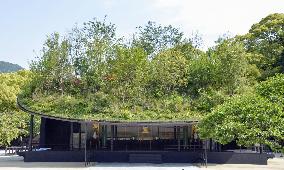
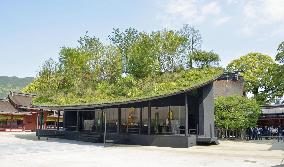
Dazaifu Tenmangu, a Shinto shrine with a history of more than 1,100 years, in Dazaifu, Fukuoka Prefecture in southwestern Japan, unveils on May 12, 2023, a temporary hall built ahead of the first renovation of its main hall in 124 years slated to start in late May. The temporary hall designed by Japanese architect Sosuke Fujimoto will be used until the completion of the main hall in 2026.

  •  
Dazaifu Tenmangu shrine interim hall

Dazaifu Tenmangu shrine interim hall

Dazaifu Tenmangu, a Shinto shrine with a history of more than 1,100 years, in Dazaifu, Fukuoka Prefecture in southwestern Japan, unveils on May 12, 2023, a temporary hall built ahead of the first renovation of its main hall in 124 years slated to start in late May. The temporary hall designed by Japanese architect Sosuke Fujimoto will be used until the completion of the main hall in 2026.

  •  

Western black crested gibbons spotted in SW China

STORY: Western black crested gibbons spotted in SW China DATELINE: April 20, 2023 LENGTH: 00:00:57 LOCATION: KUNMING, China CATEGORY: ENVIRONMENT SHOTLIST: 1. various of western black crested gibbon STORYLINE: Footages of western black crested gibbons seeking food have been captured in Wuliangshan National Nature Reserve in southwest China's Yunnan Province. The western black crested gibbon is a critically endangered species and is under first-class national protection in China. For many years, China has been committed to the protection of the rare species and its habitat. According to the latest survey, the global population of western black crested gibbons is about 1,100 to 1,400, most of them distributed in Yunnan. Xinhua News Agency correspondents reporting from Kunming, China. (XHTV)

  •  
Coming-of-Age Day ceremony at Tokyo Disneyland

Coming-of-Age Day ceremony at Tokyo Disneyland

TOKYO, Japan - Two women pose with Mickey Mouse for a commemorative photo at Tokyo Disneyland in Urayasu, Chiba Prefecture, on Jan. 12, the Coming-of-Age Day national holiday in Japan, after attending a ceremony there to celebrate the start of adulthood. About 1,100 people aged 20 years old -- the legal age of adulthood in Japan -- took part in the ceremony.

  •  
Festival of Eras held in Kyoto

Festival of Eras held in Kyoto

KYOTO, Japan - The Festival of Eras is held in Kyoto on Oct. 23 to commemorate the founding of the ancient capital of Kyoto in 794. The festival features a procession of some 2,000 people dressed up as major historical figures over a period of 1,100 years.

  • Main
  • Top
  • Editorial
  • Creative
  • About Us
  • About ILG
  • Terms of use
  • Company
  • BEHIND
  • Price List
  • Single Plan
  • Monthly Plan
  • Services
  • Shooting
  • Rights Clearance
  • Support
  • FAQ
  • How To Buy
  • Contact Us
  • Become a Partner

© KYODO NEWS IMAGES INC

All Rights Reserved.

  • Editorial
  • Olympics
  • News
  • Sports
  • Japan
  • Tech
  • Royal
  • Disaster
  • NorthKorea
  • Old Japan
  • SNS

  • Creative
  • Food
  • Japan
  • Landscape
  • Animal
  • Popular
  • #Ukraine
  • #Thailand
  • #coronavirus
  • #N. Korea
  • #Russia
  • #China
  • #Ukraine
  • #Thailand
  • #coronavirus
  • #N. Korea
  • #Russia
  • #China
  • Food
  • Japan
  • Landscape
  • Animal
  • Olympics
  • News
  • Sports
  • Japan
  • Tech
  • Royal
  • Disaster
  • NorthKorea
  • Old Japan
  • SNS